Pack Smarter, Travel Lighter

Ravish Kumar
| 27-02-2026
 · News team
The night before a trip often turns into a quiet panic. Clothes pile up on the bed.
Shoes multiply. That “just in case” sweater somehow feels essential. And suddenly, your suitcase won't close. Packing isn't just about fitting things inside a bag—it's about making smart decisions before you even unzip it.
If you want smoother airport walks, easier hotel check-ins, and less stress overall, the real trick is packing with intention.
Start With a Clear Packing Plan
Most overpacking happens because there's no structure. You throw in options instead of outfits. A simple plan eliminates guesswork.
How to plan effectively:
Check the exact weather forecast for your destination three days before departure.
List daily activities (city walking, beach time, business meetings).
Build outfits around those activities instead of packing random pieces.
For example, if you're traveling for five days with two dinners out and one hiking day, plan five complete outfits plus one backup top. That's it. Not ten shirts.
Actionable tip: Lay out full outfits on your bed before placing anything into your suitcase. If one piece doesn't match at least two other items, remove it.
Use the 5-4-3-2-1 Rule
This simple structure prevents excess while covering essentials.
The basic formula:
Five tops
Four bottoms
Three pairs of shoes
Two layering pieces (jacket, cardigan)
One set of sleepwear
You can adjust numbers depending on climate, but the framework keeps you disciplined.
For a seven-day trip, this usually works because you can rewear bottoms and rotate tops. Fabrics like cotton blends or lightweight merino dry overnight if washed in a hotel sink.
Actionable tip: Choose a neutral color palette—black, navy, beige, or gray—so everything mixes easily. That alone can reduce your clothing volume by 30–40%.
Roll, Don't Fold
Rolling clothes isn't just a social media trend. It genuinely saves space and reduces wrinkles for most fabrics.
How to roll correctly:
Fold sleeves inward.
Smooth the fabric flat to remove air.
Roll tightly from bottom to top.
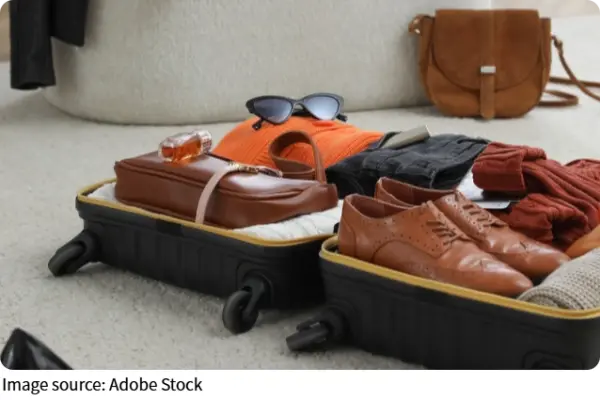
Place heavier items like jeans at the bottom of the suitcase and lighter tops above. Fill gaps with socks or smaller garments to prevent shifting.
Actionable tip: Test this before your trip. Pack one half of your suitcase folded and the other half rolled. You'll quickly see which method fits more without bulging.
Use Packing Cubes Strategically
Packing cubes aren't just about aesthetics—they improve organization and reduce stress when unpacking.
Best ways to use them:
One cube for tops.
One cube for bottoms.
One small cube for undergarments and socks.
When you reach your hotel, you can place cubes directly into drawers instead of unpacking everything. It saves time and keeps your suitcase structured for the return trip.
Actionable tip: Choose compression cubes if your airline has strict carry-on limits. They reduce volume without requiring you to sit on your suitcase to close it.
Limit Toiletries Smartly
Toiletries are often the heaviest part of a carry-on. Instead of bringing full-size bottles, scale down intentionally.
To pack efficiently:
Use travel-sized containers under 3.4 oz (100 ml) for flights.
Share items like shampoo or sunscreen with travel companions.
Check if your accommodation provides basics before packing duplicates.
A typical hotel provides shampoo, conditioner, and body wash. Confirm this in advance and skip those items entirely if available.
Actionable tip: Pack toiletries in a transparent pouch at the top of your bag for quick airport security checks. It reduces delays and avoids digging through clothes.
Prepare a “First 24 Hours” Kit
Lost luggage happens. Delayed arrivals happen. A small essentials pouch in your carry-on protects you from frustration.
Include:
One change of underwear and socks.
Travel toothbrush and mini toothpaste.
Phone charger and basic skincare.
If your checked bag doesn't arrive on time, you'll still feel refreshed and functional.
Actionable tip: Keep this kit packed year-round in a small pouch. After each trip, restock immediately so it's ready for the next departure.
Weigh Before You Leave
Airlines typically allow 15–23 kg (33–50 lbs) for checked luggage, depending on your ticket type. Exceeding the limit can cost $50–$150 USD at the airport.
How to avoid fees:
Use a handheld luggage scale (they cost around $10–$15 USD).
Weigh your bag after fully packing.
Remove heavy shoes or unnecessary items if close to the limit.
Actionable tip: Wear your heaviest shoes and jacket on the plane if needed. That small adjustment can save several pounds.
Packing well isn't about perfection. It's about clarity. When you know exactly what you need—and why—you stop stuffing your suitcase with “maybe” items. The reward isn't just a lighter bag. It's easier movement through airports, less time unpacking, and fewer decisions each morning of your trip.
Next time you pack, try trimming just three items you'd normally throw in. You probably won't miss them. And when your suitcase closes without effort, you'll feel something better than relief—you'll feel ready.