Market Motion

Elena Rossi
| 08-05-2026
 · News team
Stock prices rarely move in a straight line, and that's what makes the market feel alive. One moment everything looks steady, and the next, things shift without warning.
But behind that constant movement, there's usually a combination of three forces working together: money flow, market sentiment, and new information. Once you start seeing those layers, the “randomness” begins to look a bit more structured.
Money flow sets the direction
At the most basic level, stock prices move because of buying and selling pressure. When more capital flows into a stock than out of it, prices tend to rise. When the opposite happens, they fall. It sounds simple, but the reality is more layered.
Large institutional participants often play a big role here. Their transactions can shift supply and demand balance in noticeable ways, especially in less liquid stocks. Even gradual accumulation or distribution over time can create trends that look smooth on the surface but are actually built from many small trades.
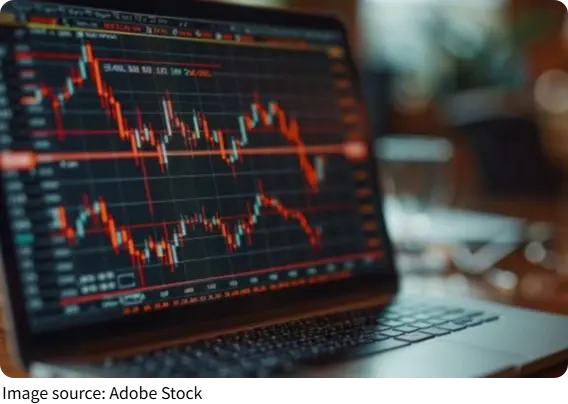
Volume is often a clue people watch closely. A price move with strong trading volume usually signals stronger conviction behind the move, while weak volume can suggest hesitation.
Market sentiment changes everything
Even when numbers don't change much, perception can move prices. Sentiment reflects how investors feel about the market at a given moment—confident, cautious, or uncertain. These emotions can spread quickly and influence decision-making far beyond fundamentals.
For example, when confidence is high, buyers may step in more aggressively, pushing prices higher even without major news. On the other hand, when uncertainty rises, selling can accelerate as people try to reduce risk exposure.
What makes sentiment tricky is that it often feeds on itself. Rising prices attract attention, which brings in more buyers, which pushes prices further. The same loop works in reverse during declines.
Information acts as the trigger
News and data releases often act as catalysts rather than the core reason for movement. Earnings reports, policy changes, or industry developments can shift expectations quickly, causing rapid revaluation of stocks.
But the interesting part is how the same piece of information can lead to different reactions. If expectations were already high, even good results might disappoint the market. If expectations were low, average results might be seen as positive. It's not just the news itself—it's how it compares to what was already priced in.
This is why timing matters so much. Markets are constantly trying to anticipate what comes next, and prices often adjust before the full picture is clear.
How the three forces work together
Money flow, sentiment, and information don't operate separately. They interact constantly. A piece of news can shift sentiment, which then attracts new money flow. Or strong buying activity can change perception even without new information.
This interaction is what creates the uneven, sometimes unpredictable movement people see every day. It's not one single driver—it's a chain reaction of different forces responding to each other in real time.
Understanding this doesn't remove uncertainty, but it does change how you read the market. Instead of seeing price changes as isolated events, they start to look like outcomes of overlapping pressures.

In the end, the market is less about perfect prediction and more about interpreting how these forces are lining up at any given moment—and how quickly they might shift again.