Location Equals Profit

Finnegan Flynn
| 29-05-2026
 · News team
Hello Lykkers! If you’ve ever noticed how certain business districts suddenly become expensive, crowded, and highly desirable, there’s usually one silent force behind it: transportation access.
It doesn’t always get attention like flashy buildings or new developments, but it plays a decisive role in shaping commercial property value over time.
In fact, many of the world’s strongest commercial hubs didn’t grow randomly—they grew because people could reach them easily.
Why transport access matters so much
Commercial real estate depends on one core idea: the movement of people and goods. Offices need employees to arrive on time, shops need customers to walk in, and logistics centers need efficient distribution routes.
When transportation improves, accessibility increases. And when accessibility increases, demand rises. That demand is what pushes property prices upward.
This is why a building next to a major transit hub often becomes significantly more valuable than a similar building just a few blocks away.
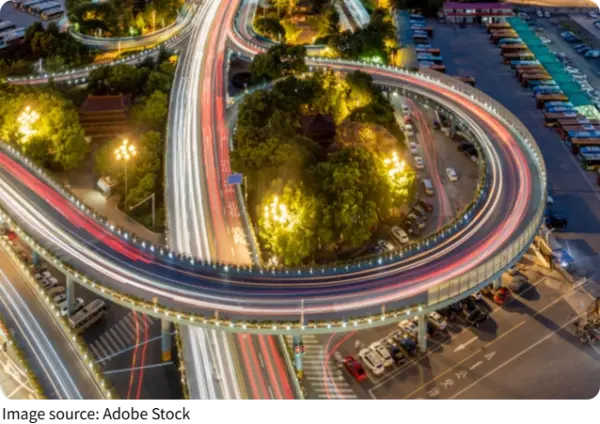
The “walkability premium” effect
One of the most noticeable impacts of transportation access is what investors often call the walkability or connectivity premium.
Properties located near subway stations, bus terminals, or major intersections tend to attract:
- Higher tenant demand
- Lower vacancy rates
- Stronger rental income
- Faster appreciation over time
This happens because businesses benefit directly from foot traffic and employee convenience. A retail store near a transit hub, for example, naturally gets more visitors without additional marketing costs.
How public transit transforms business districts
Large-scale public transport systems—especially metro rail and bus networks—can reshape entire cities.
When a new station opens, nearby areas often experience:
- Increased commercial development
- Rising land prices
- Higher density office construction
- Shift from residential to mixed-use properties
Over time, these areas evolve into “secondary business districts” that gradually compete with older city centers.
Urban economists often describe this as a ripple effect: accessibility spreads economic activity outward from transit nodes.
Urban economist Edward Glaeser, a professor at Harvard University known for his research on cities and economic growth, has highlighted a consistent pattern in global urban development: cities grow stronger when people can move efficiently between jobs, homes, and commercial centers.
His research emphasizes that transportation networks are not just infrastructure—they are economic engines. Better connectivity reduces friction in daily business activity, which increases productivity and ultimately supports higher property values in connected areas.
Road infrastructure and commercial value
It’s not only trains and buses that matter. Road access plays a major role, too.
Commercial districts near highways, ring roads, and arterial routes often attract:
- Warehouses and logistics companies
- Corporate headquarters
- Large retail centers
- Service industries
Easy vehicle access reduces delivery costs and travel time, making the location more attractive for businesses that depend on efficiency. Over time, this operational advantage translates into higher property valuations.
Airports and global business zones
Airports are another powerful driver of commercial appreciation.
Areas surrounding international airports often develop into:
- Business hotels
- Conference centers
- Corporate offices
- Trade and logistics hubs
The reason is simple: global connectivity. Companies that rely on international clients or frequent travel prioritize locations with fast airport access. As business activity grows, so does demand for nearby commercial real estate.
Transit expansion and early investment advantage
One of the most important investment lessons in real estate is timing.
When governments announce new transit lines or infrastructure projects, commercial property values in nearby areas often begin to rise long before construction is complete.
Early investors benefit from:
- Lower entry prices
- Gradual appreciation during development
- Strong demand once the system becomes operational
However, this also comes with risk—projects can be delayed, changed, or canceled, which is why careful research is essential.
The long-term pattern: connectivity drives value
Across cities and decades, one pattern remains consistent: better-connected areas outperform isolated ones.
Even when buildings are identical in quality, location near transport access often determines:
- Rental demand
- Tenant stability
- Resale value
- Long-term appreciation potential
In simple terms, transportation doesn’t just support commercial property—it shapes its future.

Final thoughts
Transport access is one of the most powerful and often underestimated forces behind commercial real estate growth. It influences how people move, how businesses operate, and how cities evolve over time.
For investors, the lesson is clear: buildings matter, but connectivity often matters more.
When evaluating commercial property, it’s not just about what stands on the land today—it’s about how easily the world can reach it tomorrow.