Nature Creates Wealth

Amina Hassan
| 08-07-2026
 · News team
Hello, Lykkers! For decades, parks, trees, wetlands, and green spaces were often viewed as expenses on a city's budget.
They made neighborhoods more attractive and improved quality of life, but their financial value was rarely measured. Today, that perspective is changing.
Around the world, cities are discovering that environmental benefits can create real economic returns, helping communities become both greener and more financially resilient. Rather than treating nature as a cost, many urban leaders now see it as an asset that can generate value in multiple ways.
From Environmental Assets to Economic Assets
Cities have traditionally invested heavily in roads, bridges, and utilities because their economic benefits were easy to calculate. Green infrastructure, however, was often harder to quantify.
Advances in environmental economics are changing that. Urban forests can reduce cooling costs, wetlands can lower flood damage expenses, and parks can increase nearby property values. By assigning financial value to these benefits, cities can better justify investments in environmental projects.
This shift is helping local governments view natural resources as part of their long-term economic strategy rather than simply a public amenity.
Green Bonds Are Funding the Transition
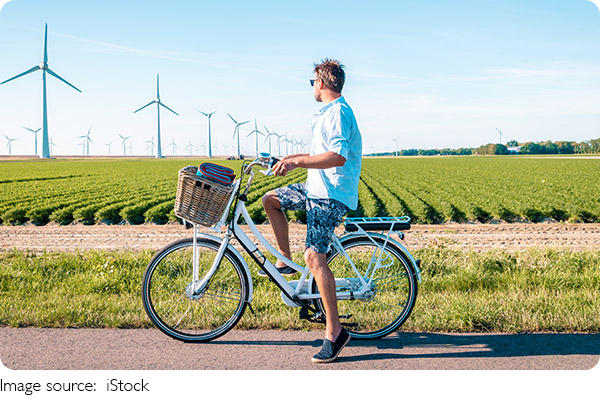
One of the most popular tools for monetizing environmental benefits is the green bond. These bonds allow cities to raise capital specifically for projects such as urban tree planting, renewable energy systems, water conservation programs, and sustainable transportation networks.
Investors are increasingly attracted to green bonds because they combine financial returns with measurable environmental outcomes. For cities, they provide access to funding while demonstrating a commitment to sustainable development.
As demand for environmentally focused investments grows, green bonds are becoming an important part of municipal finance strategies.
Property Values Tell a Powerful Story
One of the clearest financial benefits of urban greening appears in the property market. Homes and commercial buildings located near parks, greenways, and tree-lined streets often command higher prices than comparable properties elsewhere.
Higher property values can lead to increased tax revenue for local governments, creating a cycle in which environmental improvements help fund future public services and infrastructure projects.
For city planners, this means that investments in green spaces can produce economic gains long after the initial project is completed.
Reducing Costs Through Nature
Environmental projects are not only generating revenue—they are also reducing expenses.
Trees provide shade that lowers energy consumption during warm weather. Green roofs help regulate building temperatures. Natural drainage systems can reduce the need for costly flood-control infrastructure. These savings may not always appear as direct income, but they strengthen municipal finances by reducing operational and maintenance costs over time.
Cities that invest in nature-based solutions often find that prevention is far less expensive than repairing environmental damage later.
What Experts Say About Natural Capital
Professor Sir Partha Sarathi Dasgupta, Frank Ramsey Professor Emeritus of Economics at the University of Cambridge, led The Economics of Biodiversity: The Dasgupta Review for HM Treasury. His work argues that nature should be treated as a form of capital that supports economies, not as an unlimited resource outside financial decision-making. As he put it in a Royal Society address, “Nature is an asset. We are embedded in Nature.”
That idea matters for cities because parks, wetlands, trees, and green corridors do more than improve scenery. They help regulate heat, absorb water, support biodiversity, and reduce risks that would otherwise become public costs. Dasgupta’s research has helped push policymakers and finance institutions to consider environmental assets as part of long-term economic planning, especially when decisions involve infrastructure, resilience, and public investment.
The Rise of Environmental Data
Technology is also playing a major role in this transformation. Cities now use satellite imagery, sensors, and data analytics to measure the financial impact of environmental projects.
Officials can estimate how much carbon is absorbed by urban forests, calculate energy savings from green infrastructure, and track improvements in air quality. These measurements provide evidence that environmental investments can deliver measurable economic returns.
As data becomes more sophisticated, the business case for urban sustainability continues to strengthen.
A New Model for Urban Prosperity
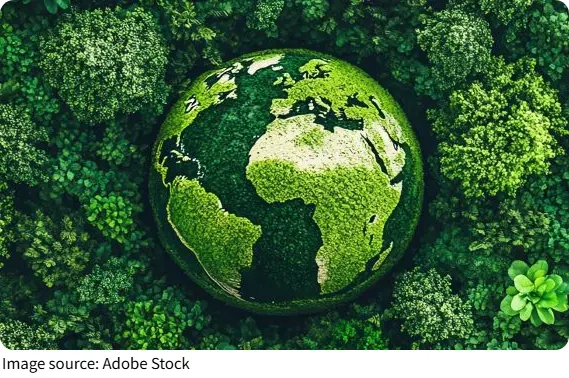
The idea that environmental protection and economic growth are competing goals is gradually fading. More cities are discovering that healthy ecosystems can support stronger finances, attract investment, and improve long-term resilience.
Monetizing environmental benefits is not about putting a price tag on nature alone. It is about recognizing that natural systems create real value for communities, businesses, and governments.
As urban populations continue to grow, cities that successfully integrate ecological assets into their financial strategies may find themselves better positioned for the future. The most successful cities may not simply be the ones with the tallest buildings or largest budgets, but those that understand how to make nature work as part of their economic foundation.