Bitcoin Beyond Basics

Claire
| 30-09-2026
 · News team
Hello, Lykkers! By now, most people understand what Bitcoin is. The real question isn’t what it is, but whether it deserves a place in a long-term investment strategy.
Beyond the hype and headlines, Bitcoin’s deeper value lies in how it is reshaping financial thinking at a structural level.

A Macro Asset in a Changing Financial System
Bitcoin has a feature that distinguishes it from national currencies: its issuance follows rules encoded in its protocol, with the total supply capped at 21 million bitcoin. That scarcity has led some investors to view it as a possible store of value or hedge against currency debasement.
But describing Bitcoin as a proven inflation hedge goes too far. Its price has experienced enormous swings, and research has found that crypto markets can respond to monetary policy tightening in ways similar to those of other risk assets. An IMF working paper, for example, found that tighter U.S. monetary policy reduced crypto prices through a risk-taking channel, challenging the idea that crypto reliably provides protection from broader market risk.
Bitcoin's monetary rules are predictable, but its market value remains highly sensitive to investor demand, regulation, liquidity, interest rates, and broader financial conditions.
Institutional Access Has Changed
Institutional involvement has changed how some investors can gain exposure to Bitcoin. Investment products, professional custody services, and other financial infrastructure have made it possible to access Bitcoin without directly managing private keys or buying it through a crypto exchange.
That development should not be mistaken for proof that Bitcoin's price will rise or stabilize. Institutional participation can increase accessibility and liquidity, but research has also found growing connections between crypto and conventional financial markets.
The important change, therefore, is not that institutions have validated Bitcoin's future value. It is that Bitcoin exposure has become more integrated into parts of the conventional investment system.
What Bitcoin Does to a Portfolio
Bitcoin has historically behaved very differently from many conventional investments, including experiencing unusually large gains and losses. That makes its effect on a portfolio highly dependent on allocation size, purchase price, holding period, and changes in correlations with other assets.
Calling this an “asymmetric” opportunity can be misleading. It is technically true that an unleveraged investor cannot lose more than the amount invested, but the same is true of many ordinary investments. Bitcoin's price can fall dramatically, and regulatory filings for Bitcoin-related investment products continue to identify high volatility and the possibility of sudden, substantial losses as significant risks.
Whether Bitcoin improves a particular portfolio therefore depends on the investor's objectives, risk tolerance, time horizon, and other holdings rather than on a universal allocation rule.
Expert Insight
Torbjørn Bull Jenssen, CEO of digital-asset research firm K33, has presented a bullish long-term case for Bitcoin. In his 2024 investment thesis, he argued that demand could increase if Bitcoin developed into what he described as a “borderless and neutral alternative to national currencies.”
That should be presented as Jensen's investment thesis rather than an established property of Bitcoin's future. His argument depends partly on expectations about greater adoption and concerns about national currencies and government debt. Other research offers a counterweight, finding that crypto prices remain sensitive to monetary policy and increasingly connected to traditional financial markets.
Volatility Is a Risk, Not a Guarantee of Opportunity
Bitcoin's volatility is one of the central considerations for long-term investors. Large price movements can create opportunities for gains, but they can just as easily produce substantial losses.
It is sometimes argued that volatility will decline as Bitcoin matures and adoption increases. That is possible, but it should not be presented as an expected outcome. Regulatory disclosures still describe extreme Bitcoin price volatility, uncertain future adoption, regulatory developments, technological risks, and competition from other digital assets as important investment risks.
Strategies such as investing gradually can change the timing of purchases, but they do not eliminate the underlying risk that Bitcoin's price may fall.
The Network Matters, but Value Is Not Automatic
Bitcoin's usefulness depends partly on its network. Miners, node operators, developers, exchanges, wallets, payment infrastructure, and users all contribute in different ways to the ecosystem surrounding it.
Greater participation can improve infrastructure and increase opportunities to use or trade Bitcoin. But the simple claim that more participants automatically make Bitcoin more valuable is too strong. Market value ultimately depends on supply and demand, and continued adoption cannot be assumed. Even current investment disclosures explicitly recognize the possibility that Bitcoin adoption could stagnate or decline.
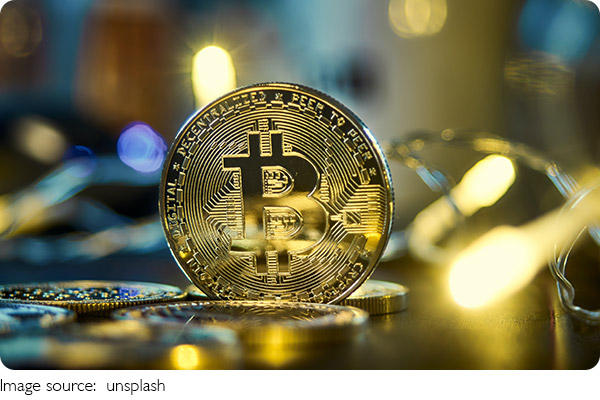
Bitcoin has changed considerably from its early years, particularly in how investors can access it and how closely it interacts with conventional financial markets. Its fixed supply rules, global network, and unusual market history make it an interesting asset to study, but they do not guarantee future returns. For long-term investors, the more useful question is not whether Bitcoin is the next big opportunity, but how its potential role, volatility, correlations, and risks compare with the rest of a portfolio.