Where Green Power Wins!

Ethan Sullivan
| 27-10-2026
 · News team
Europe's expansion of renewable electricity is creating new investment opportunities, but the financial returns from solar and wind power depend on more than the cost of installing equipment.
The location of a project, the timing of electricity production, local demand and the capacity of the power grid all influence how much its output is worth.
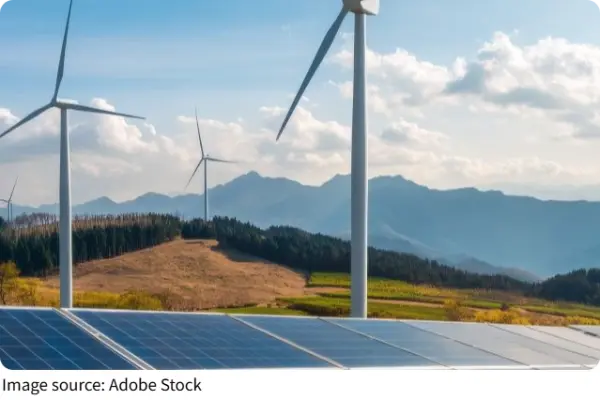
Why Location Matters for Renewable Investment
Solar and wind resources vary significantly across Europe. Southern regions generally offer stronger solar potential, while coastal and northern areas can provide favourable conditions for wind generation. However, resource quality alone does not determine a project's overall value.
Electricity must be delivered to consumers when and where it is needed. A renewable installation located near major demand centres or well-connected transmission lines may face fewer constraints than a project in an area with limited grid capacity.
Local market conditions also affect revenue. When many solar installations generate electricity simultaneously, wholesale prices can fall during sunny hours. This phenomenon, often called the cannibalisation effect, can reduce the average market price received by solar generators as installed capacity grows.
Wind projects can experience a similar effect when output from multiple installations coincides. Consequently, the best location is not always the one with the strongest natural resource; it is the location where generation patterns, grid access and market demand work together most effectively.
The Difference Between Generation Cost and Market Value
The levelised cost of electricity (LCOE) measures the average cost of producing electricity over a project's lifetime, including construction, financing, operation and maintenance. Market value measures something different: the revenue electricity can earn when it is generated. A project may have a low LCOE but still deliver weaker financial returns when its output arrives during periods of low wholesale prices.
For investors, the relationship between these measures is crucial. Project economics depend on construction costs, expected generation, electricity prices, financing terms and operating expenses. Contracts that guarantee a price or provide public support can reduce revenue uncertainty, although they may also create obligations or risks for other parties.
Comparing renewable projects therefore requires more than ranking countries by sunlight or wind speed. The timing and market value of their electricity must also be considered.
Grid Capacity and Storage Influence Returns
Electricity networks connect renewable generators with homes, factories and businesses. When transmission capacity is insufficient, a wind or solar farm may be unable to deliver all the electricity it could otherwise produce. Grid congestion can lead to curtailment, meaning available generation is reduced because the network cannot accommodate it or because system conditions make delivery uneconomic. This can lower revenue and weaken the return on investment.
Energy storage can help by absorbing electricity when supply is abundant and releasing it later when demand and prices are higher. Batteries can also provide services that support grid stability. Their economic value depends on installation costs, efficiency losses, market prices and how frequently they can be used.
Better interconnection between European countries can also improve the use of renewable power by allowing surplus electricity in one region to reach consumers elsewhere. However, new transmission lines require substantial investment and often take years to plan and build.
Why Timing Is as Important as Geography
Solar output typically peaks during daylight hours, while electricity demand varies throughout the day and across seasons. Wind generation follows different weather patterns and may complement solar production in certain periods. Combining technologies can reduce the concentration of supply at particular times. Flexible demand, storage and other dispatchable generation can further help match electricity production with consumption.
For investors, hourly and seasonal price patterns are increasingly important when estimating future revenue. Historical average electricity prices may provide an incomplete picture when renewable capacity expands and market conditions evolve. Reliable forecasts should account for changes in demand, new generation projects, grid development and potential shifts in electricity-market rules.
Expert Insight
Fatih Birol, executive director of the International Energy Agency, highlighted the importance of electricity networks in the transition to cleaner power in an official IEA statement published on October 17, 2023: “We must invest in grids today or face gridlock tomorrow.”
Solar and wind projects create different levels of economic value depending on resource quality, generation timing, electricity prices, grid access and local demand. A project with excellent natural conditions may still underperform financially when output coincides with low prices or when transmission limitations prevent electricity from reaching consumers.
Better investment decisions require a combined assessment of production costs, expected market revenue, storage options and network capacity. Coordinating renewable generation with demand and infrastructure can improve project economics while helping Europe make more effective use of its growing clean-electricity supply.